
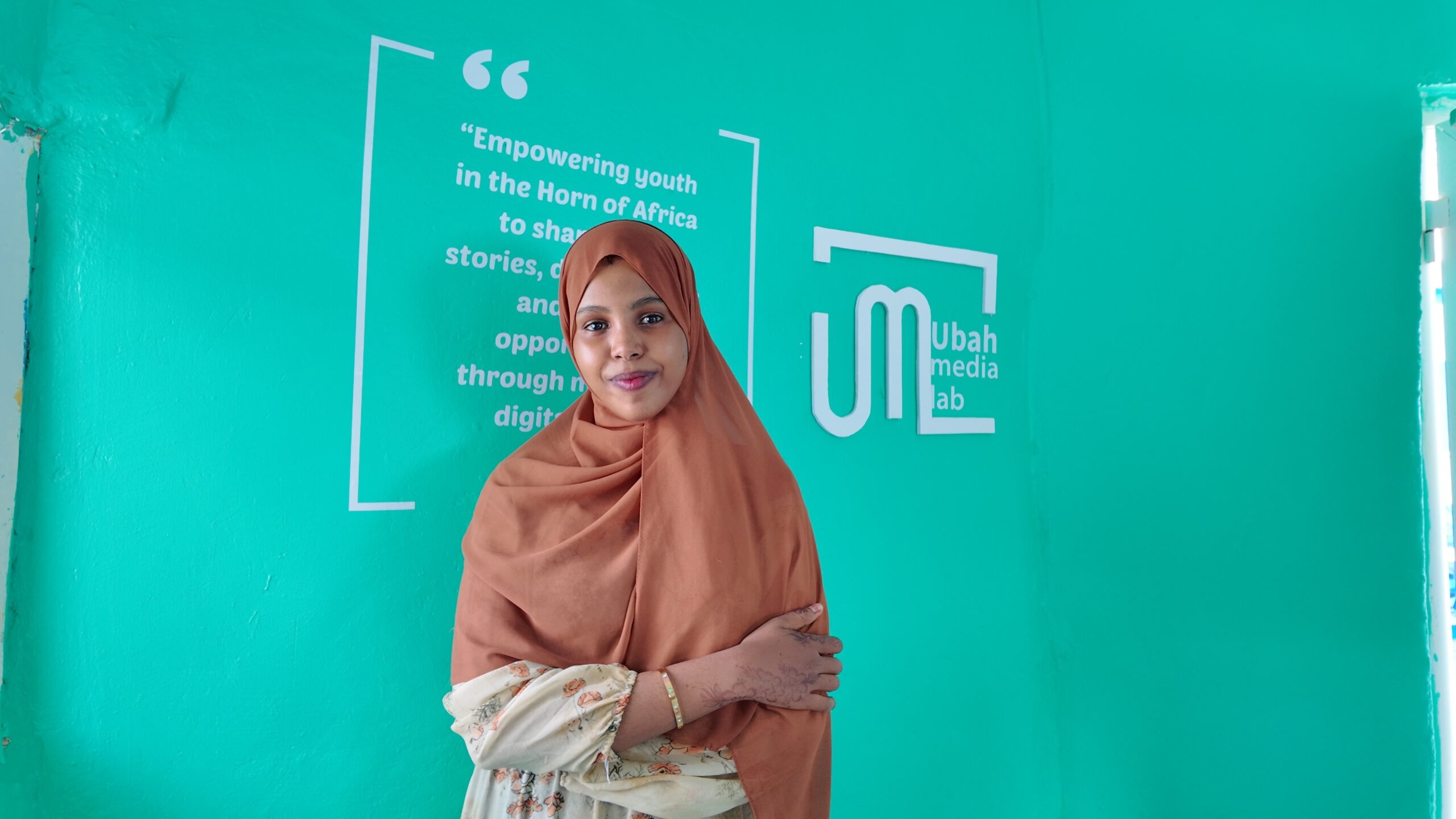
Kowsar Mohamed participated in the Media Accelerator Programme, successfully completing it and developing one of the MVPs at Ubah Media Lab: Miiska Podcast, an audio-visual platform dedicated to researching and presenting key political and social issues impacting Somali youth. She was subsequently selected as a participant for our inaugural Media Accelerator Fellowship and will be working with Ubah Media Lab as Growth and Marketing Coordinator for the next six months. On International Women’s Day, we recognize Kowsar and all young Somali women who are making positive contributions to their society.
I sincerely appreciate my journey at Ubah Media Lab as part of its first pilot Media Accelerator Programme. Only 30 participants were selected for an intensive eight-week program focused on learning, collaboration, and professional growth. This program offered specialized media training, helping students acquire essential media literacy skills and gain firsthand experience working on real-world media projects.
Participating in this experience was much more than simply attending structured training sessions. It was a deliberate process of development and self-assessment. Being chosen for such a limited group was both an opportunity and a responsibility, and I approached it with clarity and purpose.
One particular moment that stands out was the challenge of planning and producing a podcast episode. This task pushed me to refine my storytelling skills and demonstrated the importance of engaging audiences through meaningful content. It reinforced my gratitude for the program and strengthened my commitment to purposeful growth.
At the outset of my journey, I posed a critical question to myself: Would this simply be an experience to complete, or could it serve as a meaningful platform to intentionally strengthen my skills and confront my limitations? I made a conscious decision to pursue the latter, focusing on professional growth rather than mere completion. My objective was clear—to build genuine competence in the media field through hands-on exposure and disciplined effort.
From the very beginning, the program environment required me to step outside my comfort zone. It challenged me to be creative, adapt quickly, and communicate with a precision. Although I was passionate about media, I soon discovered that I faced difficulties with the technical side of things, such as using video/audio editing softwares and organizing content for digital platforms.
My first attempt at editing an audio segment stands out; I felt overwhelmed by the unfamiliar tools and frustrated by my lack of fluency. Instead of avoiding these gaps, I made the decision to confront them directly. I dedicated extra hours to exploring tutorials, sought advice from teammates, and kept practicing until editing became second nature.
This proactive approach gradually transformed my weaknesses into strengths. I began contributing to group projects with greater confidence and eventually took the lead on a the production of Miiska Podcast, which received positive feedback from both my peers and mentors. By openly facing my challenges and prioritizing growth, I gained valuable skills and developed a mindset equipped for success. I am proud of the progress I achieved through this journey.
My time at Ubah Media Lab gave me hands-on opportunities to shape content from the ground up. For example, when I helped develop a content calendar for our podcast series, I realized just how much thought goes into each step: choosing topics that matter, mapping out release dates, and coordinating with our team to ensure our messaging was both timely and relevant.
One of my biggest learning curves was mastering audio editing. I vividly remember my first attempt at editing a raw interview: the background noise was overwhelming, and I struggled to maintain the clarity of my guest’s voice. Determined to improve, I spent extra evenings experimenting with editing tools and watching tutorials online. Over time, I learned to clean, organize, and enhance audio tracks until they met professional standards.
With each new project, my awareness of the responsibility involved in media creation grew. Choosing topics was never just about following trends; I recognized a deeper duty to address sensitive subjects, such as mental health and youth activism, with both respect and accuracy. For example, before producing an episode focused on mental health, I took the initiative to consult with community leaders. This step ensured that our content was not only informative but also considerate of the diverse needs and perspectives within our audience. Through these experiences, I came to understand that technical expertise and sound ethical judgment are inseparable in media work. Reflecting on my journey, I realize that the skills I developed—from planning content calendars to editing podcasts—have shaped not only the quality of my output but also my ongoing commitment to leverage media as a force for positive impact.
Throughout the program, we were encouraged to reflect on our reasons for pursuing media. My own motivation has remained clear: I aim to use media to inspire hope, empower youth, and serve as a strong voice for my community. These words guided my actions and shaped my contributions. For instance, I now leading youth empowerment initiative, planning production of podcast episode where local young leaders discussed the significance of civic engagement. We hope this episode would spark meaningful conversations.
I am deeply grateful to our mentor, Said Mohamud Isse, whose encouragement and structured guidance provided a foundation for our growth. His advice during the podcast initiative—“Make your message count and let every voice matter”—continues to resonate with me, serving as a reminder to ground my work in authenticity and purpose.
As my journey progresses, I remain committed to advancing my skills through ongoing learning and practical experience. Recently, I enrolled in an advanced audio production workshop to further sharpen my technical abilities, with the goal of elevating the quality of future projects. I have also begun planning a youth-centered podcast series designed to spotlight local entrepreneurs and activists, providing a platform for young voices to inspire others. My dedication to ethical storytelling has grown stronger; when producing content on sensitive issues like mental health, I now actively seek input from community leaders and subject matter experts to ensure both accuracy and respect. These experiences have underscored the responsibility and the profound impact that comes with shaping narratives. Every piece of content represents a chance to inform, uplift, and build trust with the audience. My overarching goal is to create media that is not only creative and purposeful, but also produces measurable positive outcomes and is firmly rooted in integrity.
Looking to the future, I aim to further strengthen ethical storytelling, enhance production quality, and develop collaborative projects that drive education, economic awareness, and youth empowerment. For example, I plan to partner with local organizations to co-create educational campaigns on digital literacy, thereby expanding the reach and impact of our media efforts. Additionally, I am developing a series of workshops for aspiring content creators, offering practical guidance on responsible media practices and technical skills. Achieving sustainable growth in this field requires discipline, accountability, and a clear vision—qualities I am dedicated to nurturing each day. I believe that continuous effort, honest reflection, and collaboration are essential to creating media that truly matters, and I am prepared to pursue this path with unwavering consistency and heart.
Since my first day at Ubah Media Lab, my perspective on media has evolved significantly—from viewing it as a mere tool to recognizing its potential as a catalyst for meaningful change. Whether it involves leading youth discussions, producing impactful audio content, or collaborating on community-driven campaigns, each experience has deepened my skills and fueled my passion.
I am thankful for the growth, discipline, and renewed commitment I have gained, and I remain dedicated to using media to amplify voices and create lasting, positive impact. This journey is ongoing, and I look forward to the next chapter with hope, determination, and a clear sense of purpose.
Note to readers: This story was edited and restructured for clarity by Said Isse, Founder of Ubah Media Lab and the Lead Media Mentor for the Media Accelerator Programme.
Pingback: I Didn’t Just Learn Media, I Found My Voice – ubahmedialab